
This is Akanthomyces Tuberculatus. A species of fungus in the family Cordycipitaceae, known for a diverse array of entomopathogenic fungi (infect insects.) It’s native to Europe and North America.
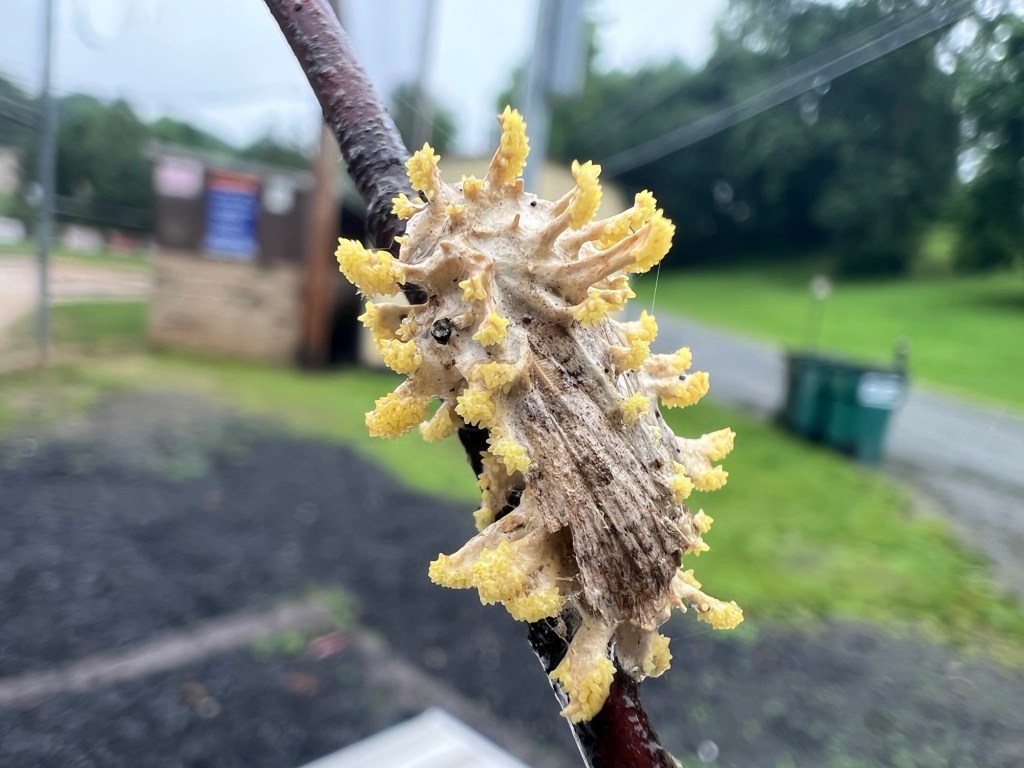
Now there’s lots of hype about zombie fungus since the release of The Last of Us on HBO/Max in 2023. But no need to worry, unless you’re a moth of course.. A thick mat will begin to develop, little bumps will appear, turning to small cones. They’ll grow to become stalk-like projections called synnemata, which bear Conidia (asexual spores produced through a process called Conidiogenesis) which will yet again start the cycle of propagating new little monsters that will infect more moths. They’re typically formed at the tips or sides of specialized hyphae called conidiophores. These non-motile spores are an essential means of fungal reproduction and dispersal. Penicillium and Aspergillus are two examples of molds that also produce Conidia.

Originally, this fascinating fungus was thought to be the telemorph (sexual stage) of Akanthomyces aculeatus but was later described as a separate species! It’s also known as Dwarf Caterpillarclub or Perithecial Moth Cordyceps.
Exploring the forest is an awesome adventure. If you don’t normally look down, try it! There’s a lot of beauty and intriguing life to see.
Terms and definitions
- Conidia– Asexual spores produced by some fungi, including molds through conidiogensis.
- Synnemata– Also known as coremia, are erect, stalk-like structures fused together of multiple conidiophores.
- Conidiophores– Specialized hyphae that bear Conidia.
- Non-Motile– The inability of fungal structures such spore or hypha, to move on its own using its cellular mechanisms.
- Hyphae– Filaments that make up a fungus’s mycelium.
 Notes from the Forest Floor
Leave a comment